
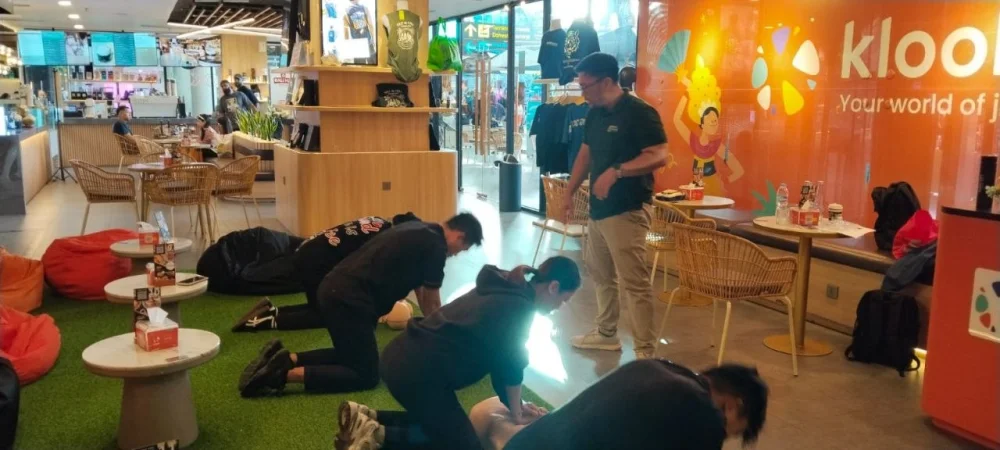
Medical emergencies can happen anywhere, including cafés, restaurants, and airport hospitality environments where staff interact with hundreds of guests every day. Having employees who know how to respond quickly and appropriately can make a significant difference before professional medical assistance arrives.
On 31 July 2026, FirstMedic conducted a First Aid & CPR Training for the team at KAFI:N Bali International Airport, providing participants with practical knowledge and hands-on experience to improve emergency response skills in the workplace.
The Importance of First Aid Training in Hospitality
Hospitality professionals are often among the first to witness medical emergencies involving guests, visitors, or colleagues. Whether responding to choking, fainting, falls, or sudden cardiac arrest, having basic first aid knowledge allows staff to take immediate and appropriate action while waiting for emergency medical services.
Regular First Aid and CPR training helps create a safer environment, improves staff confidence, and reinforces an organization’s commitment to health and safety.
Training Topics Covered
The session combined interactive learning with practical exercises to ensure participants gained both knowledge and confidence in responding to emergencies. Topics included:
- Emergency assessment and scene safety
- Recognizing medical emergencies
- Choking management techniques
- Cardiopulmonary Resuscitation (CPR) fundamentals
- Recovery position
- Effective communication during emergency situations
Participants also practiced real-life emergency scenarios, allowing them to apply newly learned skills in a controlled and supportive learning environment.
Building Safer Workplaces Through Education
Emergency preparedness is an essential part of workplace safety, particularly in high-traffic environments such as airports and hospitality venues. By investing in First Aid and CPR education, organizations help ensure their teams are better prepared to respond calmly, confidently, and effectively when unexpected situations occur.
The enthusiastic participation from the KAFI:N Bali International Airport team reflected a strong commitment to continuous learning and creating a safer experience for both employees and guests.
Training Highlights
The training featured instructor-led discussions, CPR practice using training manikins, choking response demonstrations, recovery position exercises, and interactive emergency simulations. These practical sessions helped participants strengthen their confidence while developing essential life-saving skills that can be applied in everyday workplace situations.
This educational initiative reflects the importance of ongoing emergency preparedness training and supports a culture of safety within Bali’s hospitality industry.